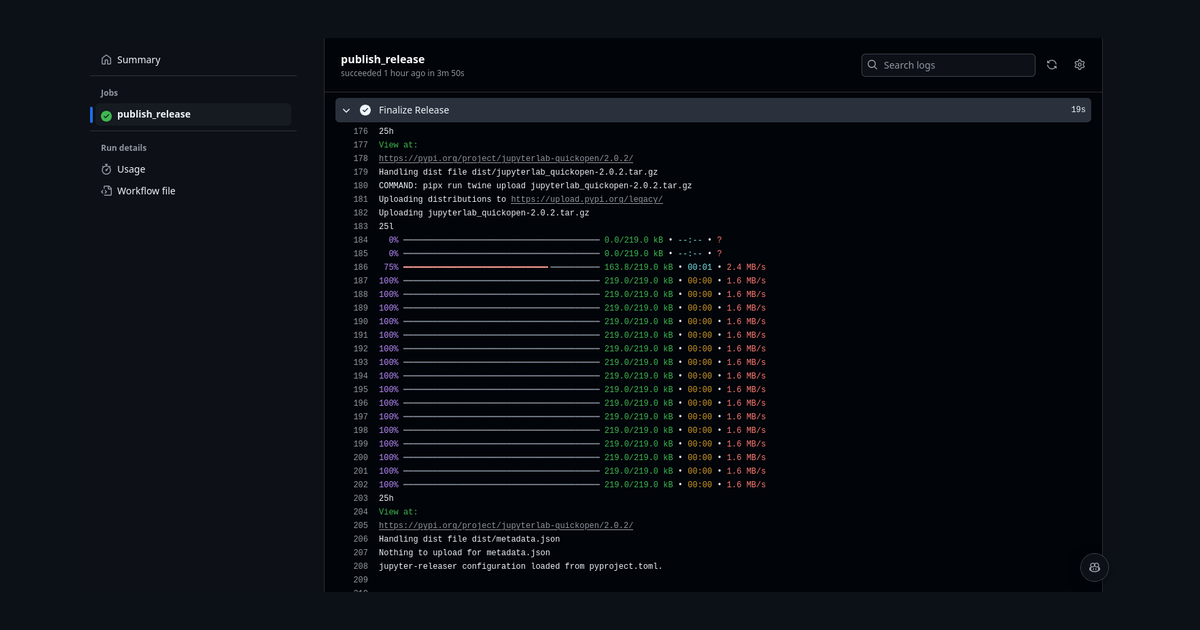
Automate your releases with the Jupyter Releaser 🚀
Jupyter Releaser is a tool developed by the Jupyter team to streamline and standardize the release process across Jupyter projects.


Deploying and operating infrastructure for Jupyter, including continuous deployment, monitoring, incident reports, and release automation.
Jupyter Releaser is a tool developed by the Jupyter team to streamline and standardize the release process across Jupyter projects.
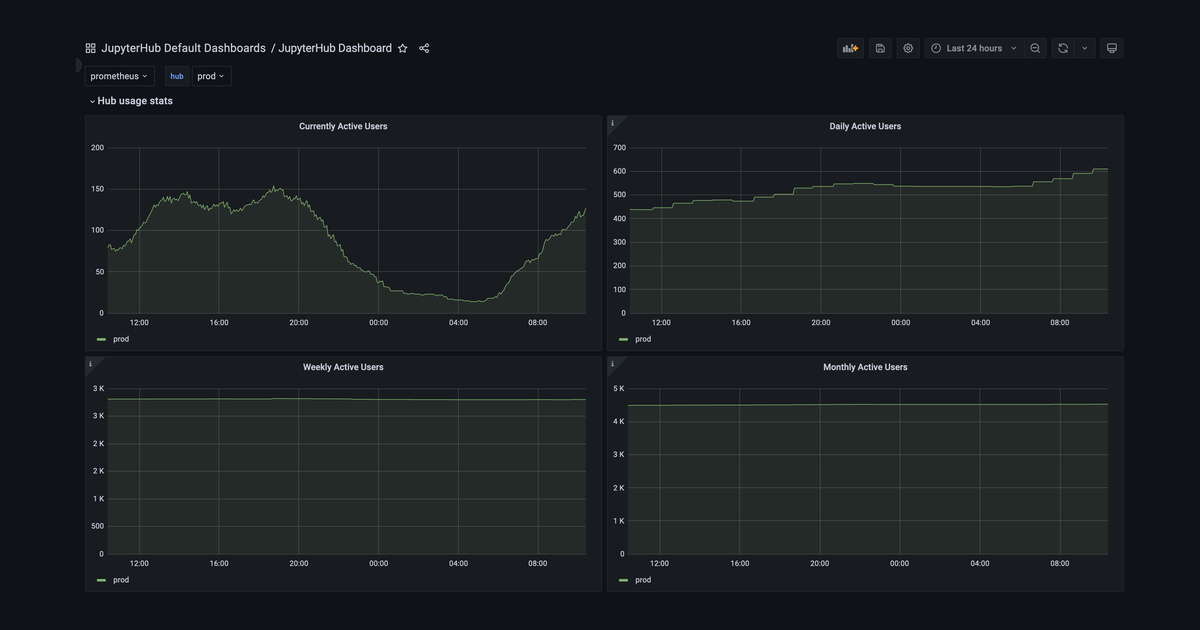
Being able to say ‘we served X unique users over the last month’ (the Monthly Active User metric) is very helpful when advocating for resources for a JupyterHub your organization is running.
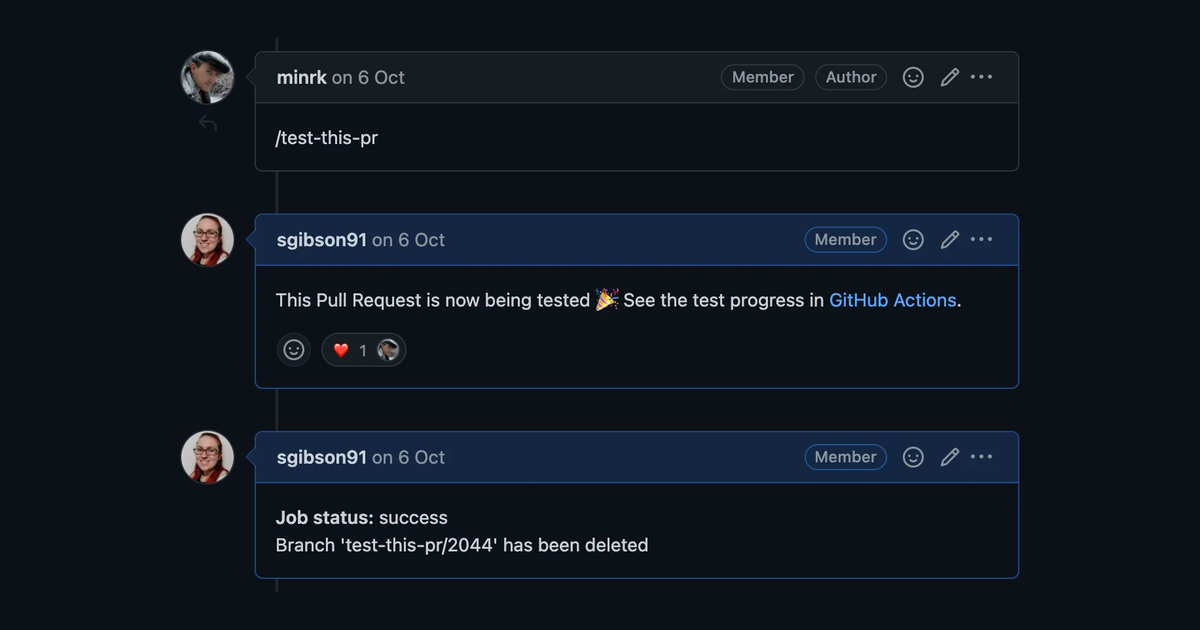
I recently did some work on the mybinder.org deployment infrastructure to solve a problem with testing Pull Requests before deployment. It had not been possible to test Pull Requests on our staging deployment because our automated workflows don’t have access to secrets.
nbviewer has moved from Rackspace to OVHcloud. That means moving from Docker to Kubernetes+Helm.
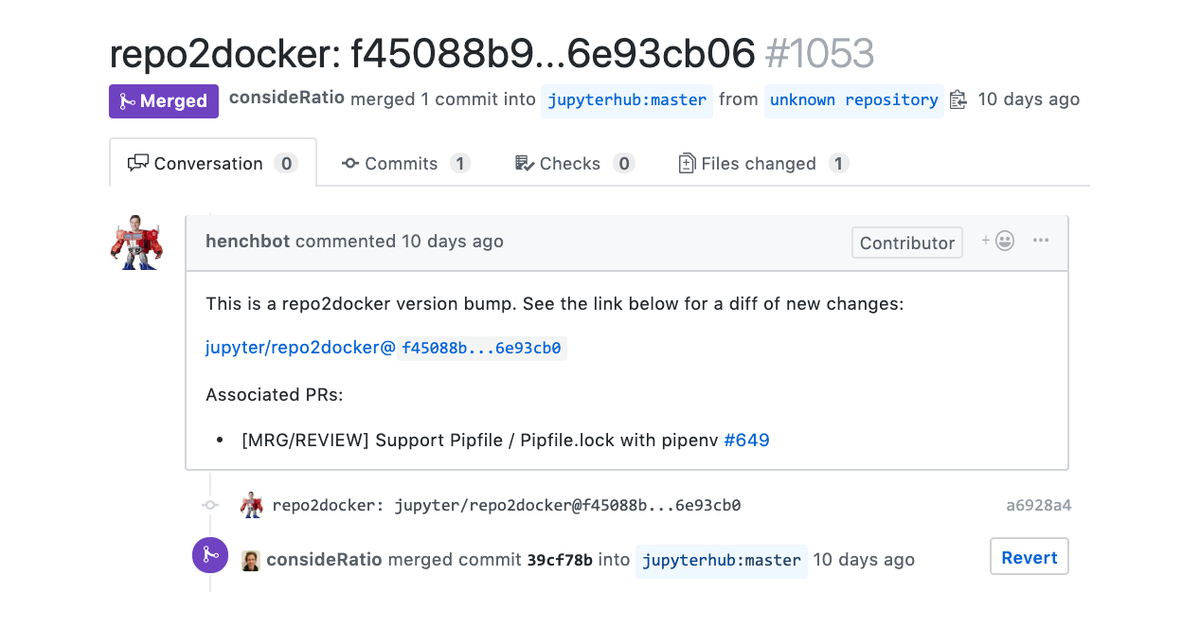
BinderHub and repo2docker are key components of the service at mybinder.org. In order to give Binder users the best experience, the Binder SRE team must continuously upgrade the version of these tools that mybinder.org uses.
A JupyterHub Showcase
update: December 14, 20:45 UTC, all services should be restored and back up.
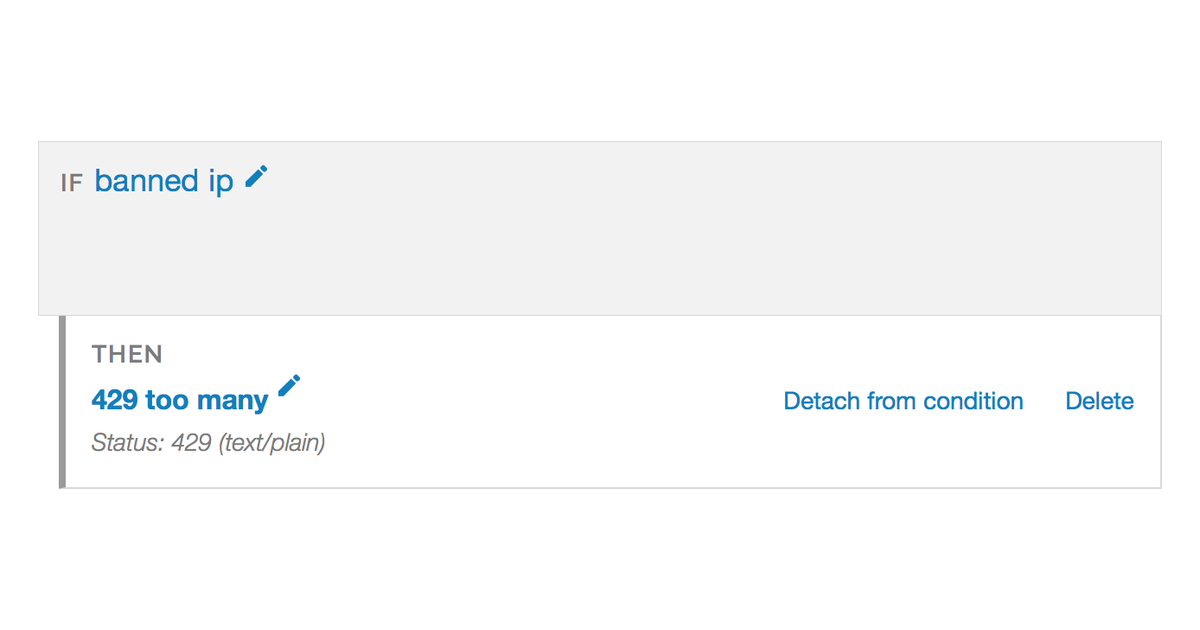
It turns out that some overzealous SEO bots were eating up all of our resources. Last week, we discovered this cause of the API rate limit exhaustion and took a few actions to resolve it.