Highlights from the Project Jupyter Mini Summit 2026
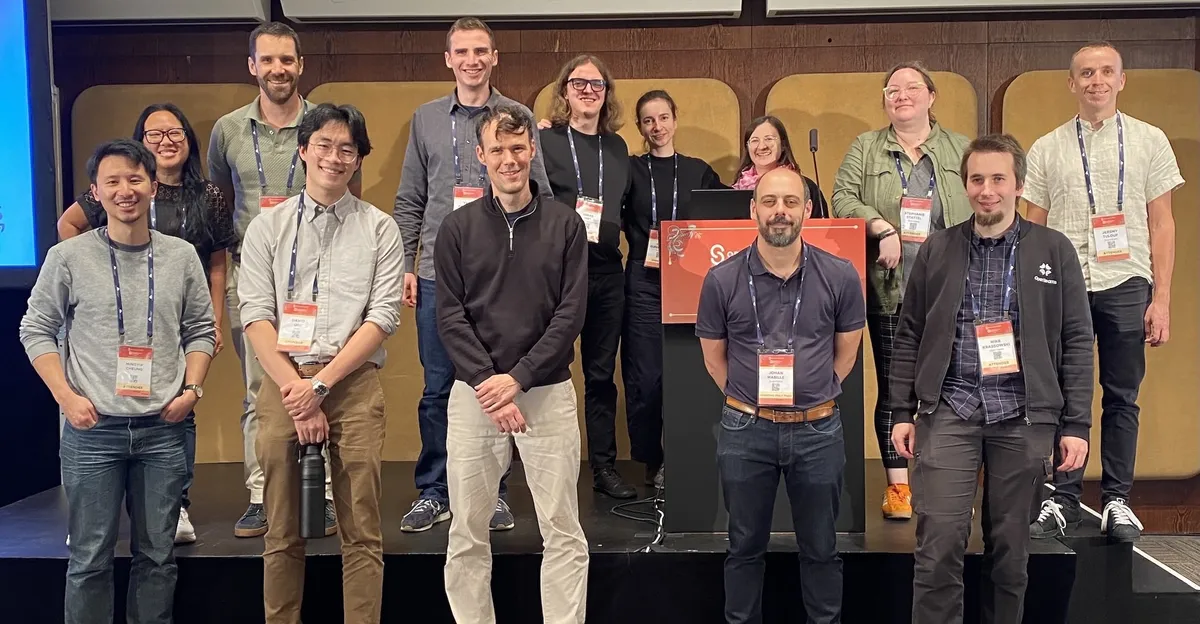
Report of the Project Jupyter Mini Summit on 6 Oct 2026 in Prague


Jupyter Book, which builds books and documentation from notebooks and MyST Markdown.
Report of the Project Jupyter Mini Summit on 6 Oct 2026 in Prague
From June 15th to 17th 2026 a Jupyter Workshop took place at Paris-Saclay University : “Demystifying MyST Markdown in education”. The workshop combined presentations in the mornings with collaborative sprints during the afternoons. It has been funded by the Jupyter Foundation and SaclAI-School.
There are moments in life when things, simply, converge. You work and study, study and work, and then, simply, it happens. It starts one day when somebody tells you “there is this new thing called Jupyter Notebook, you should give it a try!”. So you install it, play around with it.
A new Jupyter Workshop is happening June 15–17, 2026 in Orsay, France. Demystifying MyST Markdown in Education is a three-day workshop organized by the Jupyter community, focused on helping science educators adopt Jupyter Book and the MyST document engine for their teaching materials.
The Jupyter Book project has content in a bunch of different repositories — user docs, a blog, a team compass, and project & community pages. We recently finished an initiative to serve each set of content at jupyterbook.org, while keeping the source files separated in their repositories.
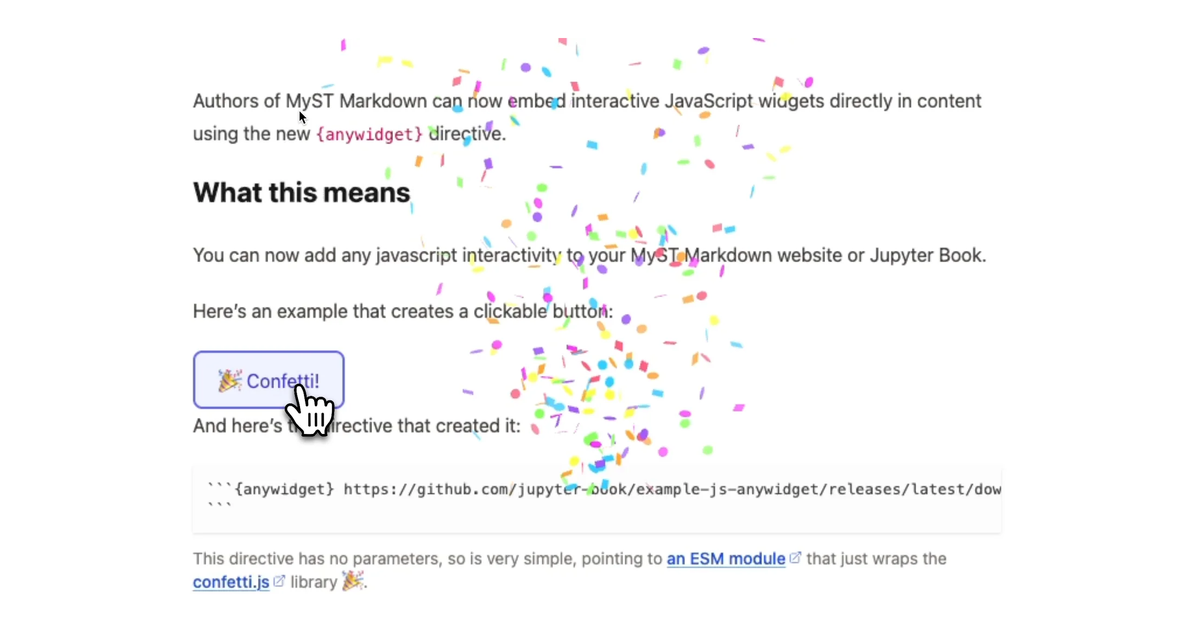
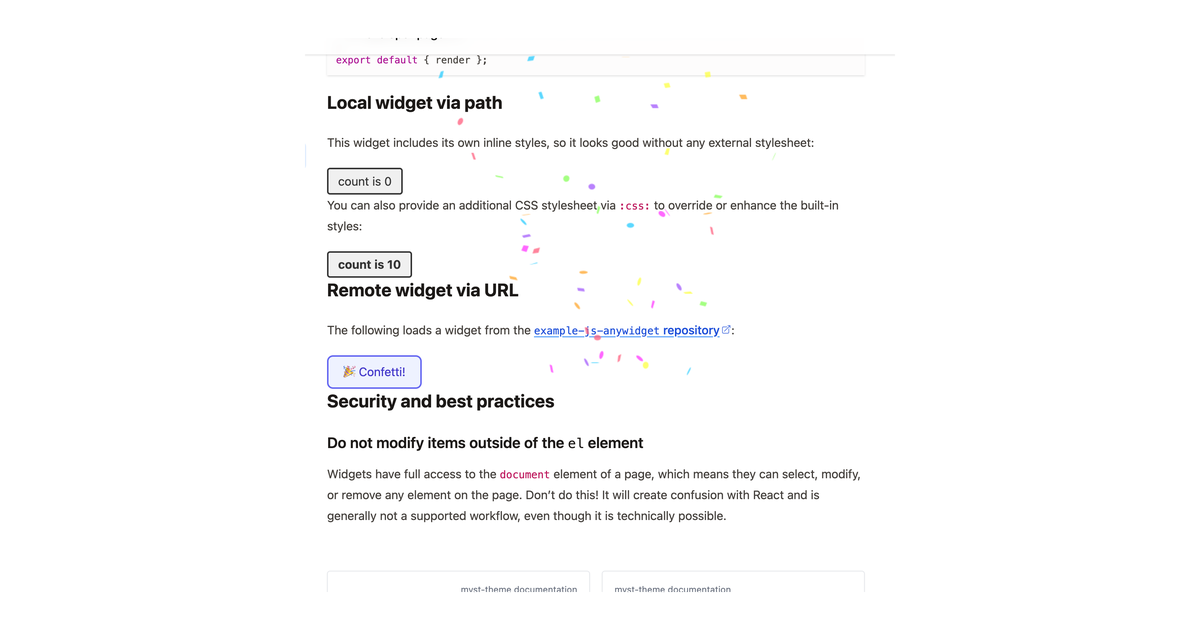
Authors of MyST Markdown can now embed interactive JavaScript widgets directly in content using the new {anywidget} directive.
The Jupyter Book team just released mystmd 1.8.2 and a new version of the MyST react theme! Below are a few things that stand out.
The JupyterHub and Jupyter Book communities are hiring a community manager.
Jupyter Book is an open source project for building beautiful, publication-quality books, websites, and documents from source material that contains computational content.