Highlights from the Project Jupyter Mini Summit 2026
Report of the Project Jupyter Mini Summit on 6 Oct 2026 in Prague


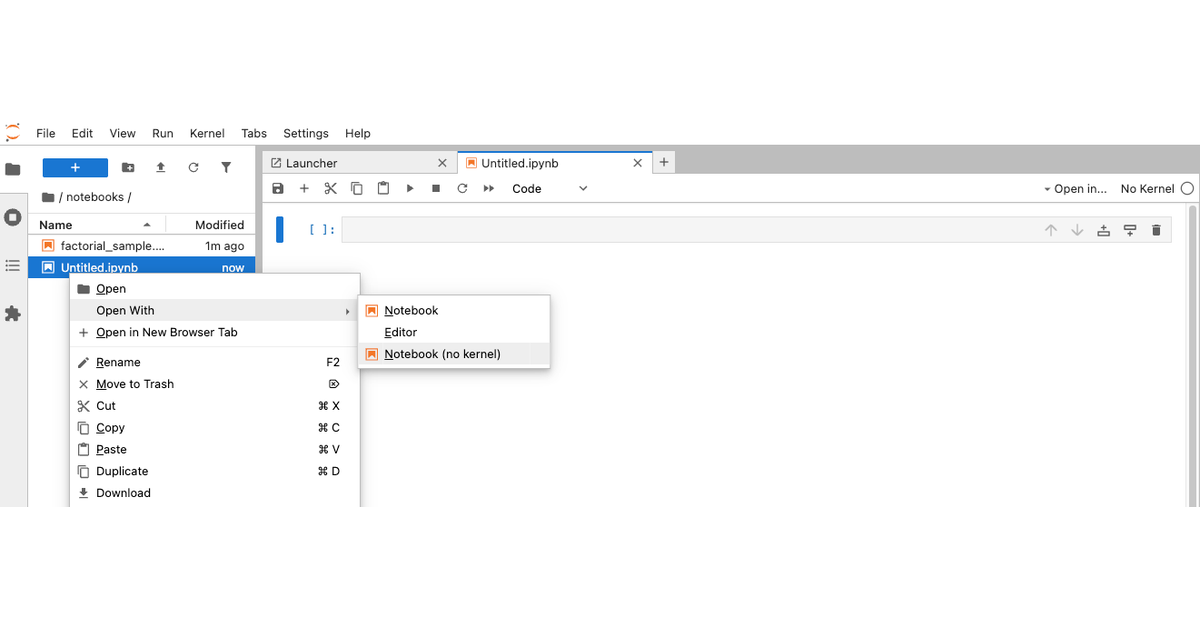
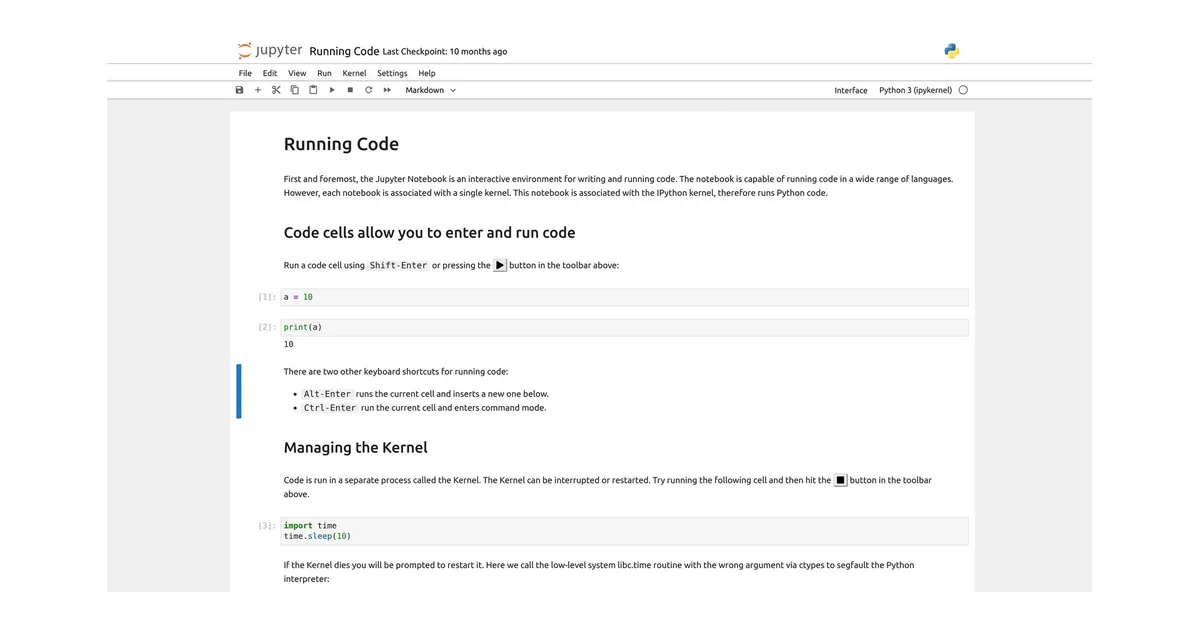
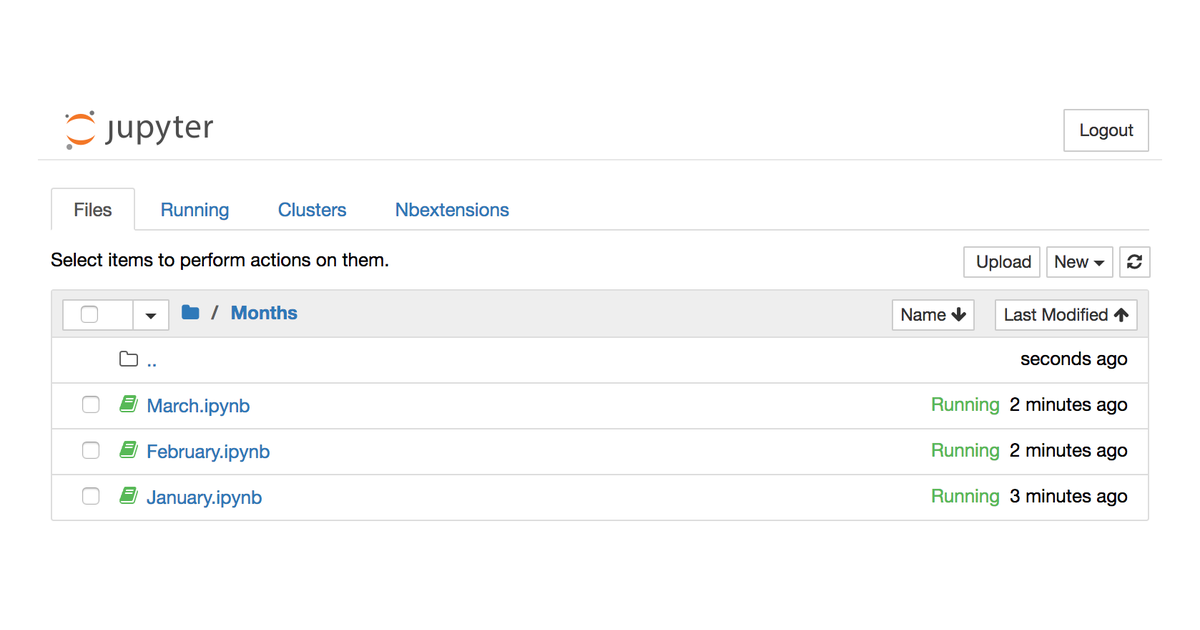
The Jupyter Notebook application.
Report of the Project Jupyter Mini Summit on 6 Oct 2026 in Prague
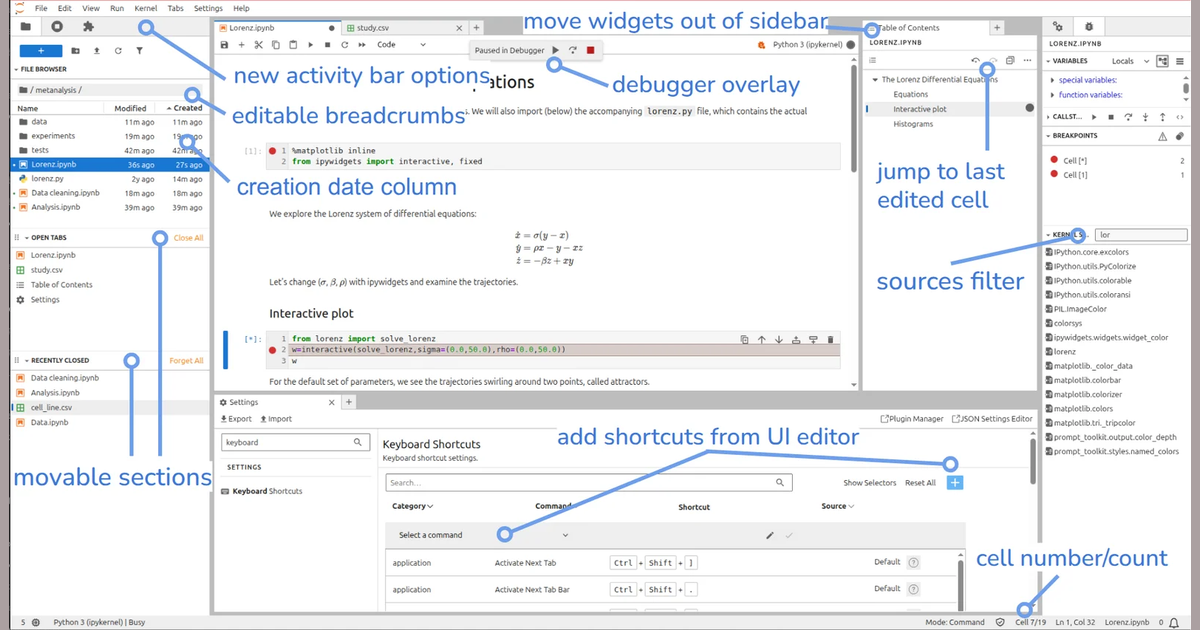
JupyterLab 4.6 features new interface customization options, improved file browser and debugger, an easy way to jump between recently edited cells, and numerous other notebook experience improvements. Keyboard shortcuts, navigation and accessibility is another focus area in this release.
JupyterLab 4.5 has been released! This new minor release of JupyterLab includes 51 new features and enhancements, 81 bug fixes, 44 maintenance tasks and 38 documentation improvements. There were 51 contributors to this release.
JupyterLab 4.4 has been released! This new minor release of JupyterLab includes 28 new features and enhancements, 76 bug fixes, 63 maintenance tasks and 34 documentation improvements. There were 56 contributors to this release.
JupyterLab 4.3.0 has been released! This new minor release of JupyterLab includes 1 new feature, 42 enhancements, 62 bug fixes, 48 maintenance tasks and 35 documentation improvements. There were 38 contributors to this release including 18 new contributors to JupyterLab.
JupyterLab 4.2.0 has been released! This new minor release of JupyterLab includes 3 new features, 20 enhancements, 33 bug fixes and 29 maintenance tasks. There were 39 contributors to this release including 10 new contributors to JupyterLab.
JupyterLab 4.1 and Notebook 7.1 are now available! These releases include several new features, bug fixes, and enhancements for extension developers. This release is compatible with extensions supporting JupyterLab 4.0 and Notebook 7.0.
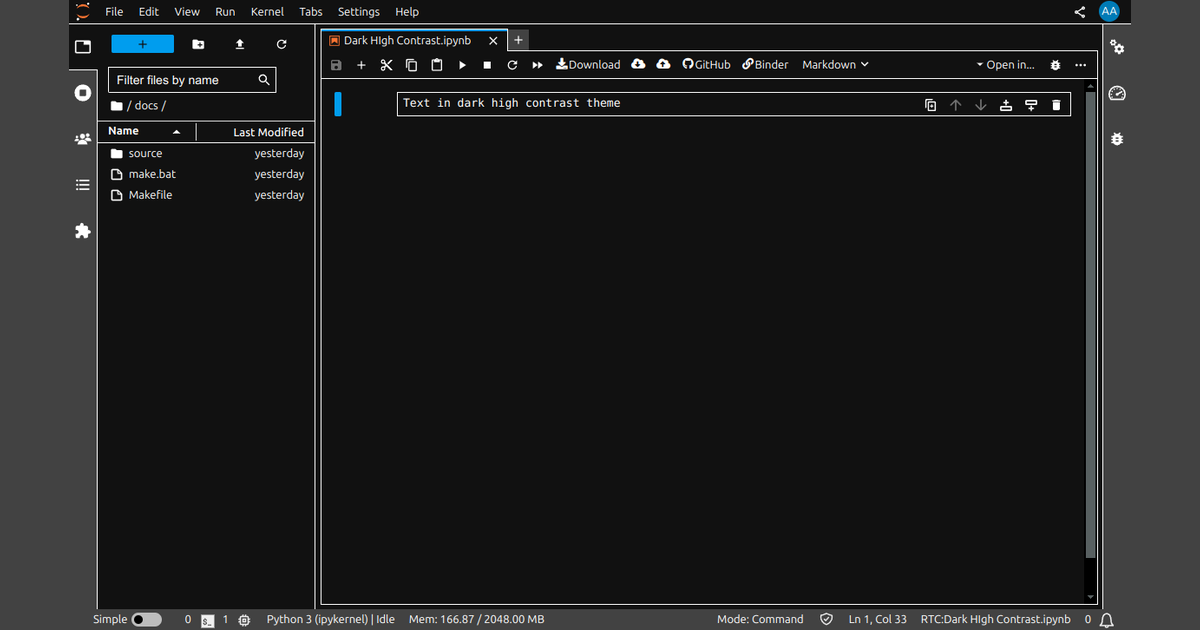
Jupyter Notebook 7 is the most significant release of the Jupyter Notebook in years. Some highlights of this release include real-time collaboration, interactive debugging, table of contents, theming and dark mode, internationalization, improved accessibility, compact view on mobile devices.
Towards a more accessible Jupyter notebook
We’d like to announce the Notebook 6.5.0 release candidate which is available on PyPI.
TL:DR; All recent JupyterLab and Notebook versions are susceptible to a attack where a maliciously crafted notebook can trigger arbitrary code execution when a user views these malicious files.
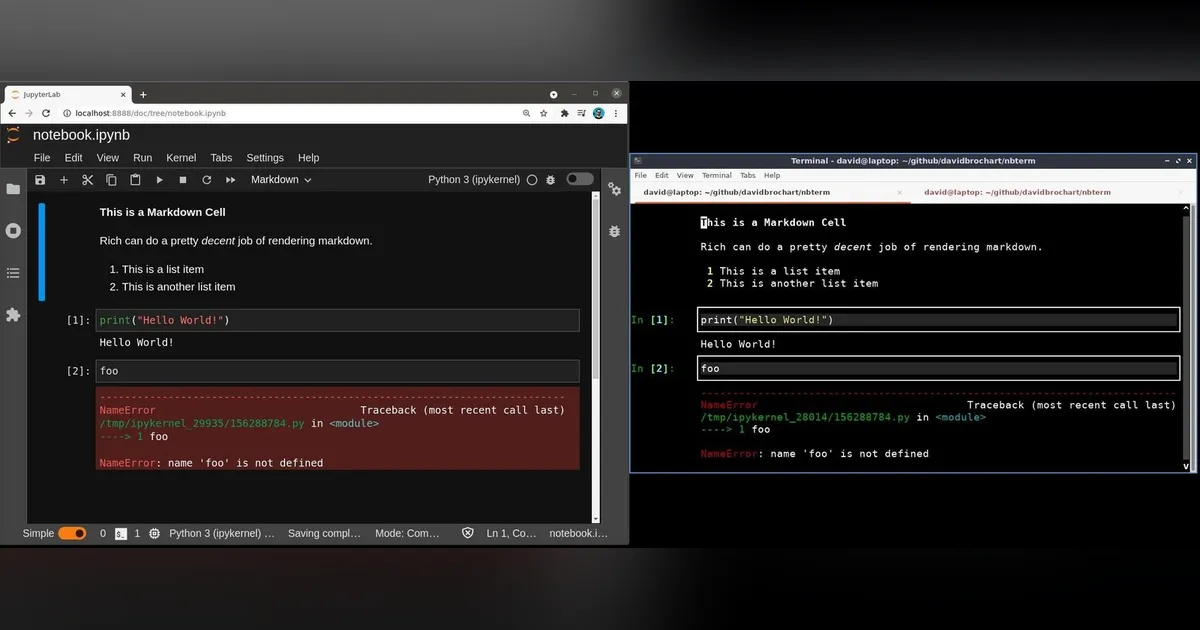
RetroLab is an alternative JupyterLab distribution, built from the ground-up, providing a notebook interface with a retro look and feel.
Jupyter notebooks are mostly known for their web-based user interface, such as JupyterLab or the Classic Notebook. They offer a great user experience, allow for rich output rendering, provide interactivity through e.g. widgets, and make possible working with remote kernels.
Update: notebook 5.7.7 and JupyterHub 0.9.5 contained incomplete fixes for this issue. 5.7.8 and 0.9.6 are released with more complete fixes.
We have just released Jupyter notebook 5.7.6 with a security fix for a cross-site inclusion (XSSI) vulnerability, where content from a Jupyter server could be included in another page if the visitor is logged in to the Jupyter server and the author of the page knows the URL of the server and the…
Two security issues have been found and fixed this week, where untrusted javascript could be executed if malicious files could be delivered to the users system and the user takes specific actions with those malicious files.
We have just released Jupyter Notebook 5.6.0. This release fixes a vulnerability that could allow a maliciously crafted notebook to execute JavaScript when it is opened, bypassing the trusted-notebook mechanism.
We are pleased to announce the release of Jupyter Notebook 5.5.0.
We are pleased to announce the release of Jupyter Notebook 5.3.0.
tl;dr: don’t disable notebook authentication!
We are pleased to announce the release of Jupyter Notebook 5.2.0. This is a minor release that includes mostly bug fixes and improvements with the notable addition of RTL (right-to-left) support.
We are pleased to announce the release of Jupyter Notebook 5.1.0. This is a minor release that includes mostly bug fixes and improvements with the notable addition of i18n (internationalization and localization) support.
We are pleased to announce the release of Jupyter Notebook version 5.0. This is the first major release of the Jupyter Notebook since version 4.0 and the “Big Split” of IPython and Jupyter.
This is a guest post by John, who initially sent it to our mailing list; we believe that it’s an interesting story, so we wanted to share it on here on the blog.