

Highlights from the Project Jupyter Mini Summit 2026
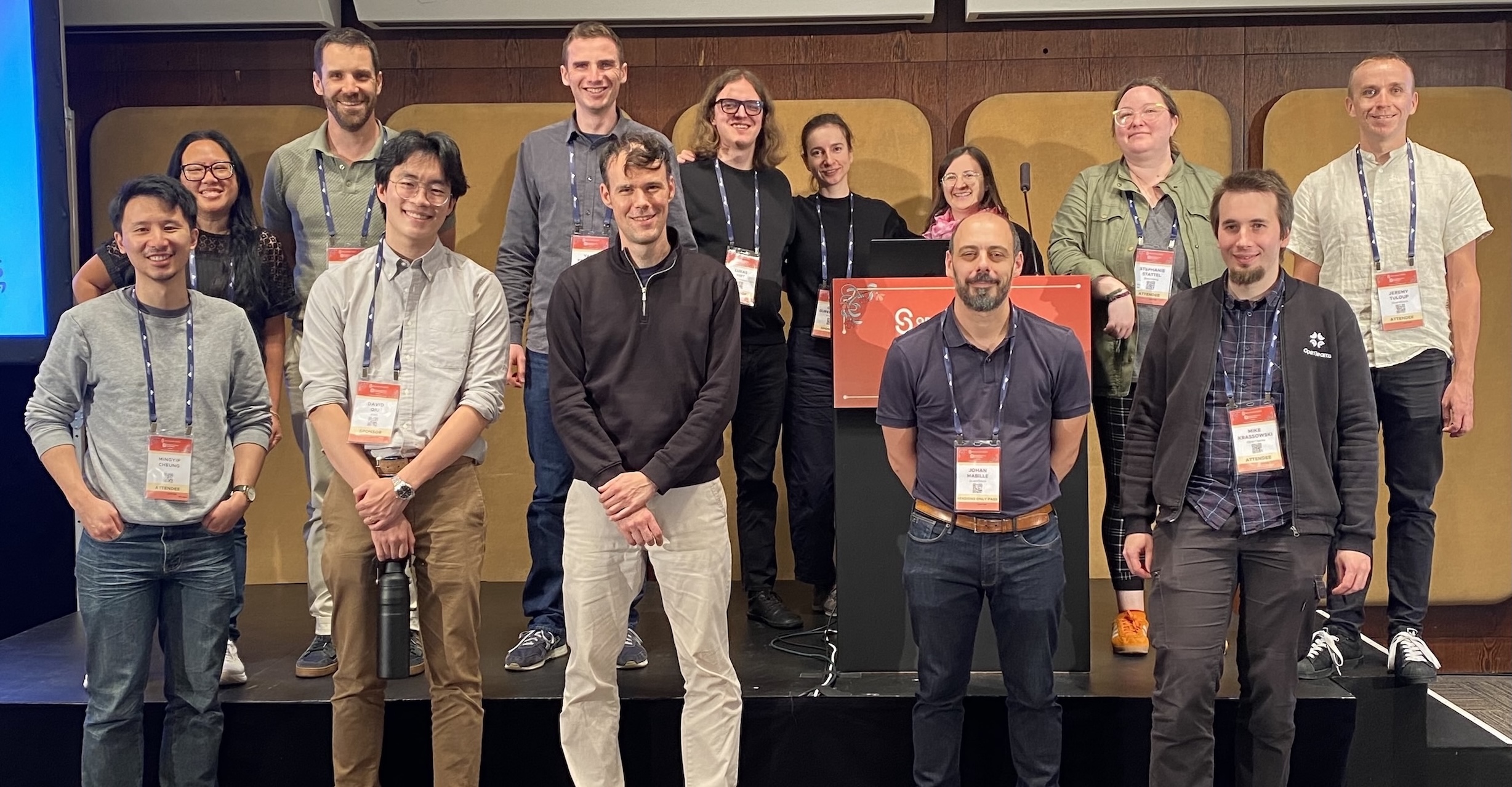
On October 6, 2026, contributors, users, and community members came together in Prague for the Project Jupyter Mini Summit, held as a satellite event of Open Source Summit Europe 2026.
The three-and-a-half-hour gathering brought together a diverse program of talks and community conversations, around new developments and opportunities for Project Jupyter.
A whirlwind tour of the Jupyter ecosystem
The session began with a broad introduction to the Jupyter ecosystem, with Serena Bonaretti presenting the people and the projects that constitute Project Jupyter (slides).
The first session focused on JupyterLab, with Mike Krassowski discussing the latest features in version 4.6 and the tooling and development practices behind its development (slides); JupyterLite, with Jeremy Tuloup tracing its evolution from an early proof of concept to deployments at significant scale (slides); and JupyterHub and Jupyter Book, with Serena Bonaretti reflecting on the experience of managing their communities (slides).
The second session covered Jupyter Deploy, with Jonathan Guinegagne exploring approaches to bringing interactive computing to cloud environments, and Jupyter Security, with Yann Pellegrini highlighting the challenges and practices involved in coordinating security across a large and diverse open source ecosystem (slides).
All presentations are available on YouTube.
AI, of course!
AI was a recurring theme throughout the summit, featuring prominently in many of the discussions and projects presented.
JupyterLab and JupyterLite allow the embedding of large language models into interactive computing workflows, bringing AI-assisted capabilities closer to the environments where users write code, explore data, and develop computational narratives.
On the other side, the new project Whybook by Mike Krassowski is a view of a Jupyter notebook with no chat box but suggested recommendations and choice behind the results.
AI is also increasingly relevant to security, as there has been a fourfold increase in reports volume since the beginning of the year.
The importance of hosting Jupyter events in Europe
One of the main takeaways from the summit discussions was that there is real value for in-person events in Europe. This reflects how much the community values opportunities to share ideas, learn from one another, and connect in person throughout the year, while remaining mindful of the environmental impact of travel.
London and Paris stand out as particularly appealing locations for future events, as many Jupyter contributors are based in or around these cities.
A spatial room!
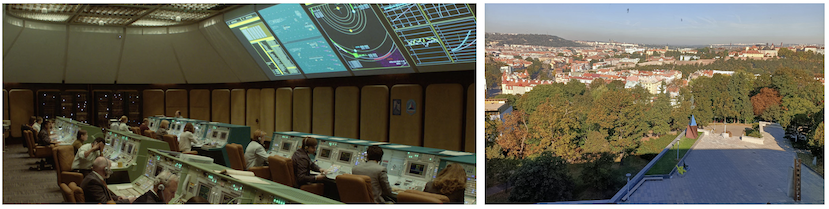
As the personnel of the conference center enthusiastically told us, we were in the very room that served as mission control in the movie Astronaut with Adam Sandler (2024)! What better setting for Project Jupyter?
Thank you and see you at Compute! Paris 2026
Thank you to everyone who joined us, contributed a talk, shared a project, asked a question, or simply took the time to be there!
The next opportunity to connect will be Compute! Paris 2026, a new annual conference dedicated to open source computing and data, taking place November 25–26, 2026 at Sorbonne Université in Paris. Jupyter will have a strong presence at the event, with a keynote by Fernando Pérez and a dedicated Jupyter track on the second day. There will also be Jupyter-focused sprints on November 27, the day after the conference. The sprints are free to attend and open to everyone, independently of conference registration. Looking forward to seeing you there!