

kernels

Plug your application into the Jupyter world

Kernels are a simple but powerful abstraction in the Jupyter architecture. They encapsulate language interpreters and make them accessible through a standardized interface. This is the key to Jupyter’s remarkable versatility, with over 100 supported languages.

· David Brochart

Abracadabra! Bringing the magics to xeus-python

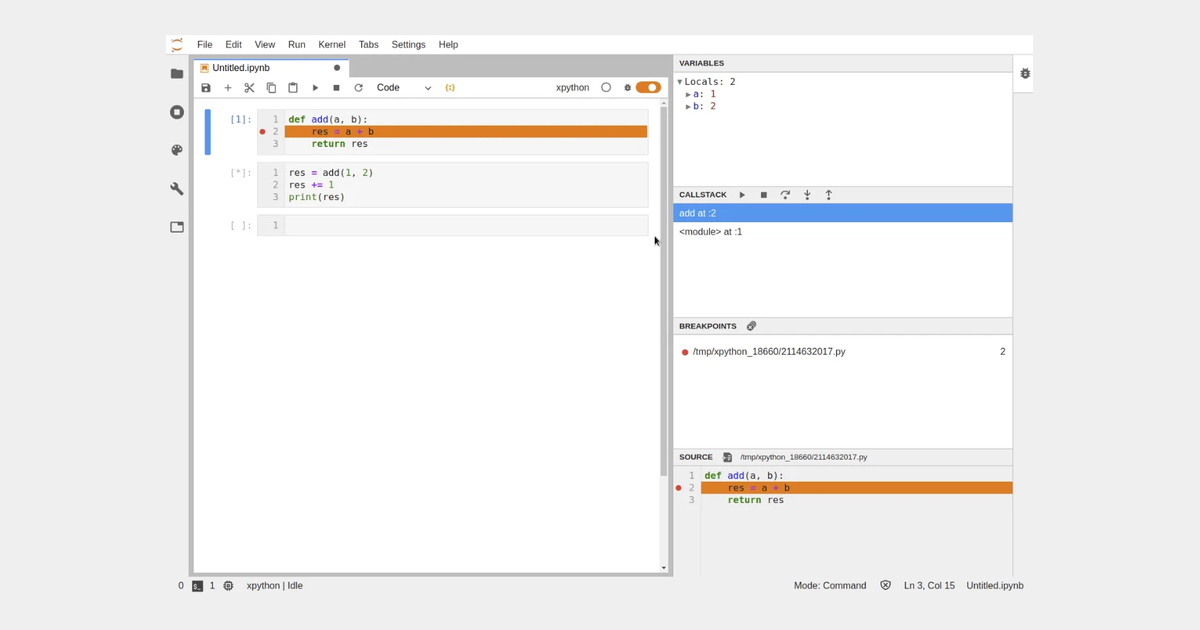
Last year, we set ourselves to implement a visual debugger for JupyterLab. This endeavor required major developments in the JupyterLab front-end, in core-Jupyter protocols, and on the kernel side (the part of the Jupyter infrastructure responsible for executing the code).

· Martin Renou

IPython xeus

A Jupyter kernel for SQLite

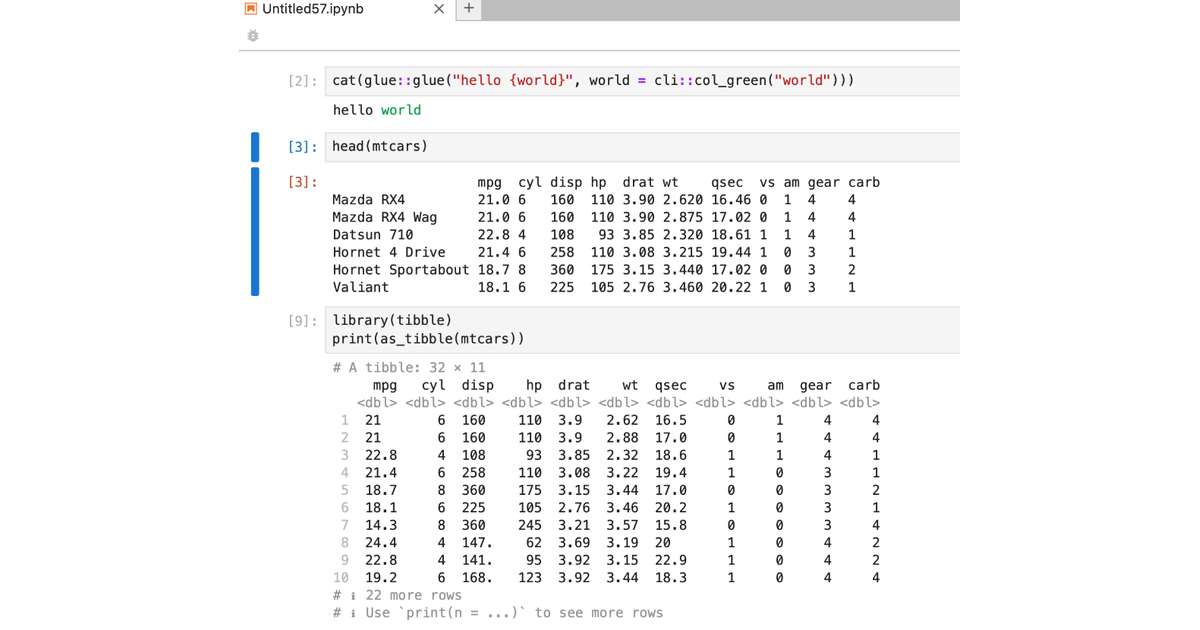
While it is well known in the Python scientific computing community, Jupyter is in fact a language-agnostic development environment. High-quality language kernels exist for the main languages of data sciences, such as Python, C++, R or Julia.

· Mariana Meireles

A visual debugger for Jupyter

Most of the progress made in software projects comes from incrementalism. The ability to quickly see the outcome of an execution and iterate has been one of the main reasons for the success of Jupyter, especially in scientific exploratory workflows.

· Project Jupyter

JupyterLab

A new Python kernel for Jupyter

Project Jupyter aims at providing a consistent set of tools for interactive computing workflows across multiple programming languages. Jupyter projects are popular at all stages of a research project from the exploration phase to the communication of results and teaching.

· Martin Renou

C++

I Python, You R, We Julia

When we decided to rename part of the IPython project to Jupyter in 2014, we had many good reasons. Our goal was to make (Data)Science and Education better, by providing Free and Open-Source tools that can be used by everyone.

· Matthias Bussonnier